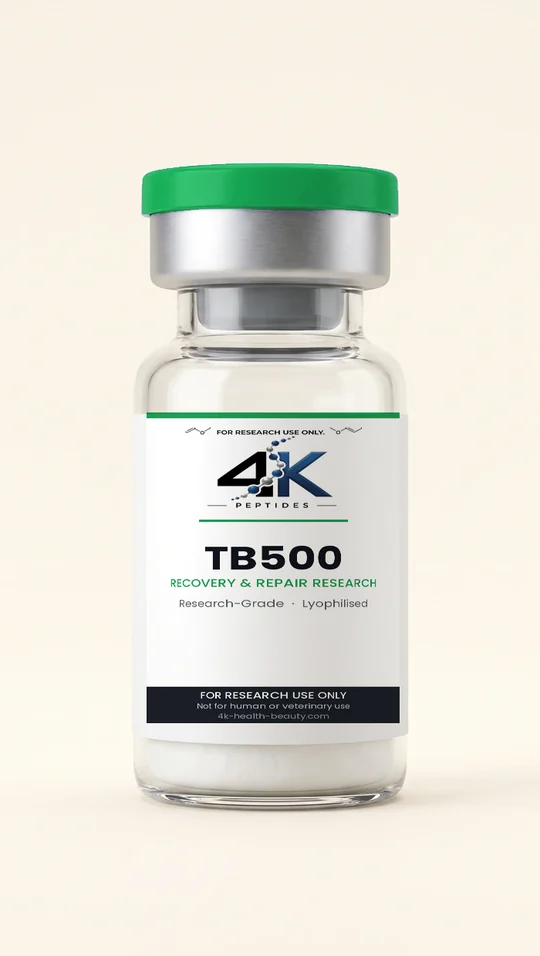
TB500
Preclinical — Animal / cell-model data onlyWhat it is
A synthetic fragment of thymosin beta-4, studied in animal models of tissue repair. Not identical to the full-length protein used in clinical trials.
TB-500 is a synthetic fragment of thymosin beta-4, studied in animal models of tissue repair and often paired with BPC-157 in research protocols.
Research context
Studied in relation to:
- Injury recovery (animal)
- Tissue repair
- Flexibility/mobility (reported)
Points in its favour in the literature:
- Promising animal healing data
- Often paired with BPC-157 in research
- Systemic action reported
Caveats and unknowns:
- Very limited human clinical evidence
- Prohibited in sport
- Unlicensed for human use
- Long-term safety unknown
Handling & reference data
Route in published researchSubcutaneous injection is the route most commonly described in the research literature.
Reported half-lifeseveral days
Published clinical / research context (not instructions)Reported research loading around ~2–2.5 mg, 1–2× weekly, then a lower maintenance amount.
Storage (lyophilised)Lyophilised (freeze-dried) powder: refrigerate at 2–8 °C short-term, or freeze at −20 °C or below for long-term storage. Keep sealed and out of light.
Reconstituted solutionOnce reconstituted: keep refrigerated (2–8 °C), protect from light, do not freeze. With bacteriostatic water, commonly used within ~4 weeks; with plain sterile water, within ~24–48 h.
Worked reconstitution example (arithmetic only)e.g. 10 mg vial + 2 mL → 5 mg/mL.
Available research formats
| Strength | SKU |
|---|---|
| 5mg | TB5 |
| 10mg | TB10 |
Current pricing (THB with USD/GBP conversion) is shown live in the catalogue, which also has a transparent U-100 reconstitution calculator.