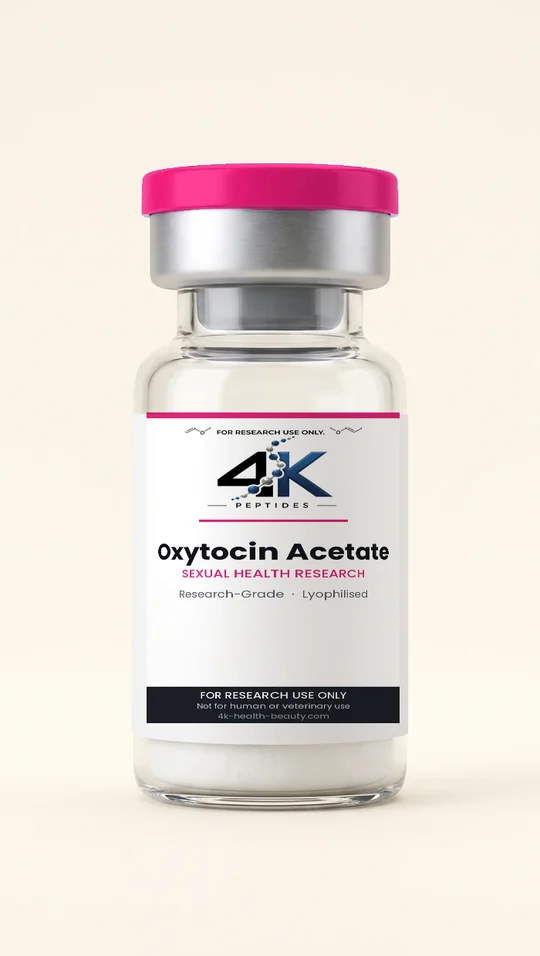
Oxytocin Acetate
Clinical evidence — Human trial data existsWhat it is
A signalling hormone with licensed obstetric uses; also researched for social/behavioural effects (often intranasally).
Oxytocin is a well-characterised signalling hormone with licensed obstetric uses. Social/behavioural research usually uses the intranasal route; injectable use is clinician-only.
Research context
Studied in relation to:
- Social/behavioural research
- Bonding research
Points in its favour in the literature:
- Well-characterised hormone
- Licensed for defined medical uses
Caveats and unknowns:
- Behavioural effects modest/contested
- Injectable obstetric use is clinician-only
- Research-grade differs from pharmacy product
Handling & reference data
Route in published researchIntranasal in behavioural research; injectable is clinician-only.
Published clinical / research context (not instructions)Behavioural research nasal doses ~24 IU; injectable obstetric use is strictly clinical.
Storage (lyophilised)Lyophilised (freeze-dried) powder: refrigerate at 2–8 °C short-term, or freeze at −20 °C or below for long-term storage. Keep sealed and out of light.
Reconstituted solutionRefrigerate; oxytocin is heat-sensitive.
Worked reconstitution example (arithmetic only)Reconstitute per supplier; often used intranasally in research.
Available research formats
| Strength | SKU |
|---|---|
| 5mg | OT5 |
| 10mg | OT10 |
Current pricing (THB with USD/GBP conversion) is shown live in the catalogue, which also has a transparent U-100 reconstitution calculator.